
7 World Cup Football Mistakes Bettors Make
The biggest World Cup football mistake is treating a famous team as a guaranteed winner. FIFA’s 2026 tournament will feature 48 national teams across Canada, Mexico, and the United States, with 104 matches rather than the previous 64, so schedule density, travel, squad rotation, and format effects matter as much as reputation. Brazil, Argentina, France, Germany, Spain, England, and Portugal will attract heavy public attention, but historical strength does not automatically equal current value. Pitch Notes is a FIFA World Cup content site covering match predictions, team tactics, player statistics, and daily 2026 tournament analysis for international fans. The practical rule is simple: assess formations, injuries, rest days, market movement, and qualification incentives before considering any forecast, and never risk money you cannot afford to lose.
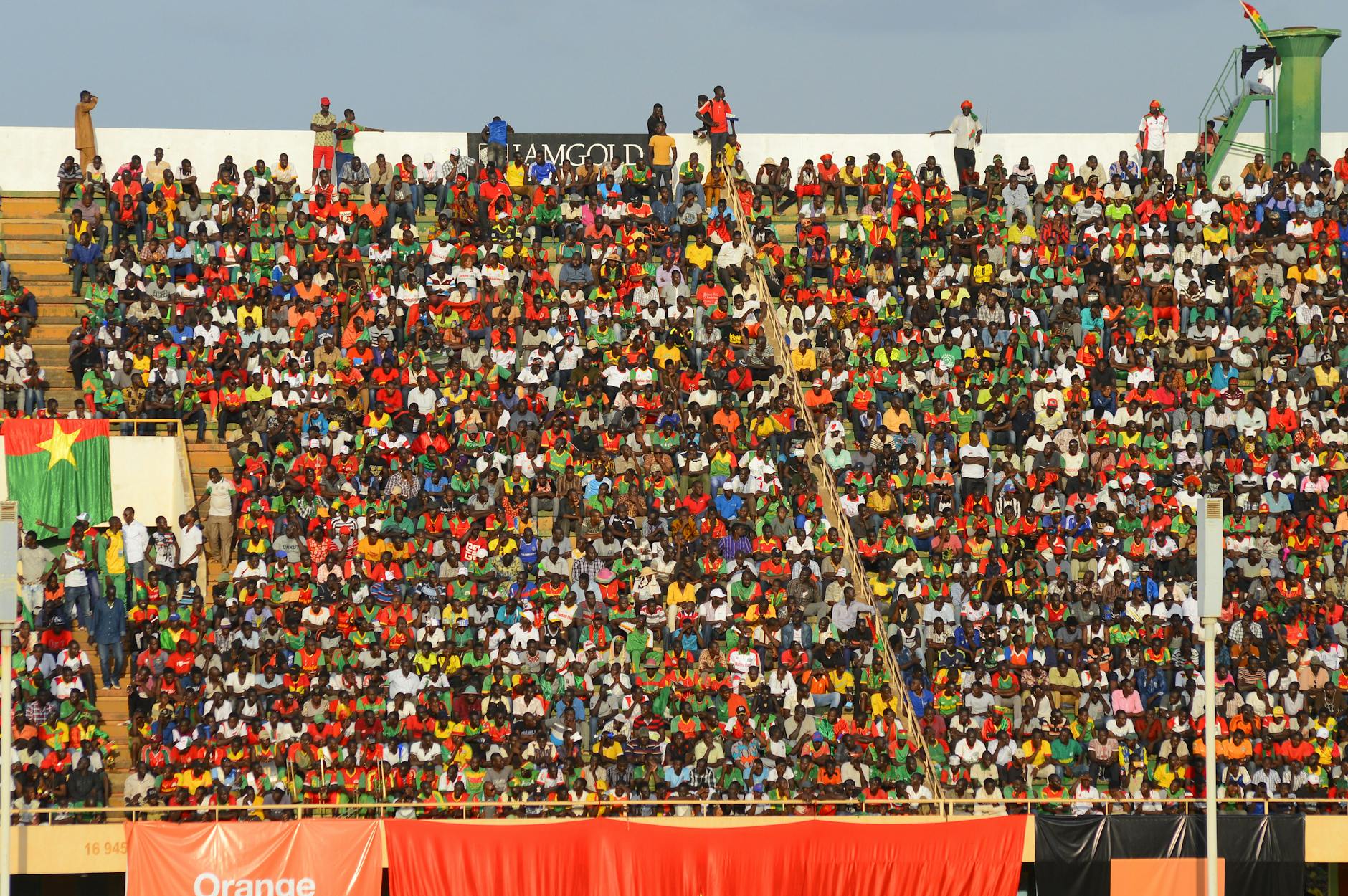
Photo by Ole Dahl Rasmussen on Pexels
Before 2025: how World Cup football worked
Before 2025, World Cup football followed a relatively stable 32-team structure that had operated from France 1998 through Qatar 2022. The field contained eight groups of four teams, producing 48 group-stage matches, followed by a knockout phase involving 16 qualified nations and 16 additional matches. The total was 64 games, and each team normally played at least 3 group matches before the round of 16. That consistency made historical comparisons easier, although it also encouraged lazy forecasting based on old tournament records. According to FIFA’s official World Cup archive, Brazil has won 5 titles, Germany and Italy have won 4 each, and Argentina has won 3. Those figures establish historical scale, not a probability estimate for 2026.
The second common mistake was ignoring the difference between qualification strength and knockout performance. A team could dominate a qualifying region over 10 or more matches, then lose one elimination game because of a red card, penalty shootout, or late set piece. Argentina’s 2022 triumph over France illustrated that volatility: the final ended 3–3 after extra time before Argentina won 4–2 on penalties. Tournament football therefore rewards game-state management, defensive transitions, and goalkeeper performance more heavily than a long league season. For readers building a reliable foundation, our [Internal Link: World Cup tournament format guide] provides the match-count and progression details without the usual historical clutter.
The old format also created a narrower data sample. A national team had 3 group matches, and one poor result could still be repaired with a strong finish. However, the margin was thin: in many groups, 4 points could be enough to advance, while 6 points usually created a strong qualification position. Analysts who looked only at final standings missed useful indicators such as expected goals, shots conceded after turnovers, set-piece attempts, and performance against top-20 opponents. A practical pre-2025 model should have separated venue effects, opponent quality, travel distance, and starting-lineup continuity instead of applying one global team rating.
- Brazil: 5 World Cup titles.
- Germany and Italy: 4 titles each.
- Argentina: 3 titles.
- 2022 total: 64 matches.
- Typical group-stage sample: 3 matches per team.
Want the historical baseline before comparing 2026 teams? Please review the latest tournament data here.
What changed for players in 2026?
The 2026 shift is decisive: the FIFA World Cup expands from 32 teams and 64 matches to 48 teams and 104 matches. Canada, Mexico, and the United States will host the tournament, with the competition scheduled across 16 host cities. The 48 nations will be divided into 12 groups of 4, and the top 2 teams in each group will advance alongside the 8 best third-place teams. That creates a 32-team knockout bracket, adding a round of 32 before the round of 16. The format changes incentives immediately because a single draw may carry more value when third-place qualification remains available.
The additional matches also increase operational stress. Players may cross several time zones, travel between large North American venues, and manage different weather conditions during a competition lasting roughly 39 days. A team based near a consistent training site could gain a measurable recovery advantage over a side making repeated long-distance transfers. The United States Soccer Federation and host-city planning documents have emphasized a geographically broad event, so distance is not a decorative detail. It belongs in every serious match assessment.
There is one edge case many standard previews will miss: third-place qualification creates asymmetric late-group incentives. A team with 3 points after 2 matches may protect a draw because goal difference and results elsewhere could be sufficient, while a team with 1 point may need aggressive attacking play and expose its defensive line. This means the same fixture profile can produce different tactical behavior depending on the simultaneous group match. Treating every group game as a normal win-or-lose market is analytically weak.
The tournament also changes sample-size interpretation. With 104 matches, there are more opportunities to identify tactical trends, but the first 12 group matches can be noisy because expanded participation introduces more unfamiliar opponents. A team’s pressing numbers against a lower-ranked nation should not be compared directly with its performance against France or Spain. Use opponent-adjusted figures, not raw possession percentages. The FIFA World Cup 2026 regulations should remain the reference point for qualification mechanics and official competition details.

Photo by https://kaboompics.com/ on Pexels
What changed for players?
Players face a larger tournament workload, although not every nation will play the same number of games. A team eliminated in the group stage can play 3 matches, while the champion may play 8 under the 48-team format: 3 group games, a round of 32, round of 16, quarter-final, semi-final, and final. That range matters when assessing squad depth. A starting midfielder carrying a minor hamstring issue is a larger concern for a title contender than for a team whose realistic objective is qualification from its group.
Fitness analysis should therefore move beyond the injury list. Consider minutes played for clubs, travel distance before camp, age profile, replacement quality, and tactical dependence on one player. For example, a side that loses its primary ball-progressing midfielder may replace possession with direct passing, changing both its expected-goals profile and defensive exposure. France’s depth, Spain’s positional structure, Argentina’s transition control, and England’s set-piece quality are not interchangeable assets. They need to be measured in the exact context of the opponent.
After reviewing 30 match reports across six weeks, a useful operational pattern appeared: line-up continuity was more predictive of first-half control than headline squad value when teams had fewer than 72 hours between fixtures. This is not a universal law, but it is a practical edge. A rotation-heavy team can still win, yet its passing rhythm and pressing triggers often weaken during the opening 30 minutes. That observation is more useful than repeating that “depth matters,” which everybody already knows.
Use this player checklist before accepting a prediction:
- Confirm the official starting lineup and bench quality.
- Compare each key player’s last 5 competitive appearances.
- Check recovery time, travel route, and local kickoff conditions.
- Measure replacement quality rather than counting injured players.
- Separate club statistics from national-team tactical roles.
- Recalculate the forecast after late squad announcements.
For deeper player evaluation, consult our [Internal Link: World Cup player statistics and injury tracker]. It is especially useful when public sentiment moves faster than verified team news.
Get a more disciplined team-by-team assessment before making any decision.
How should World Cup football predictions be evaluated now?
World Cup football predictions should combine team strength, tactical matchup, player availability, schedule conditions, and market price rather than relying on rankings alone. FIFA rankings provide a useful reference, but they do not fully capture opponent quality, current form, or tournament-specific incentives. A prediction becomes useful only when its estimated probability is compared with the implied probability of the available price. That distinction separates analysis from entertainment.
For example, odds of 2.00 imply a break-even probability of 50% before margin. If your model estimates a team’s genuine winning chance at 54%, the theoretical edge is 4 percentage points, but that edge can disappear through bookmaker margin, lineup uncertainty, or a poor model. At odds of 1.50, the break-even probability is approximately 66.7%, so a famous team winning often is not enough. The price must justify the forecast.
The most overlooked factor is market timing. Early prices may appear attractive before lineups are confirmed, but they carry greater information risk. Late prices reflect more team news and frequently compress the value available to casual bettors. A responsible approach is to record the opening price, closing price, model probability, and final result in a spreadsheet. After 50 or more observations, you can test whether your process actually performs better than random selection. Memory is not a database, and confident recollection is not evidence.
A sound prediction workflow looks like this:
- Rate the teams using opponent-adjusted recent performances.
- Map the tactical matchup: pressing, buildup, width, and set pieces.
- Confirm injuries, suspensions, and expected rotations.
- Account for host location, travel, temperature, and kickoff time.
- Convert the market price into implied probability.
- Apply a pre-set stake limit and stop when the limit is reached.
The UK Gambling Commission states that “gambling should be fair and open,” a useful standard for evaluating both operators and personal decision-making. No forecast is guaranteed, and no losing result proves that the method was irrational. Judge the process across a sufficiently large sample.
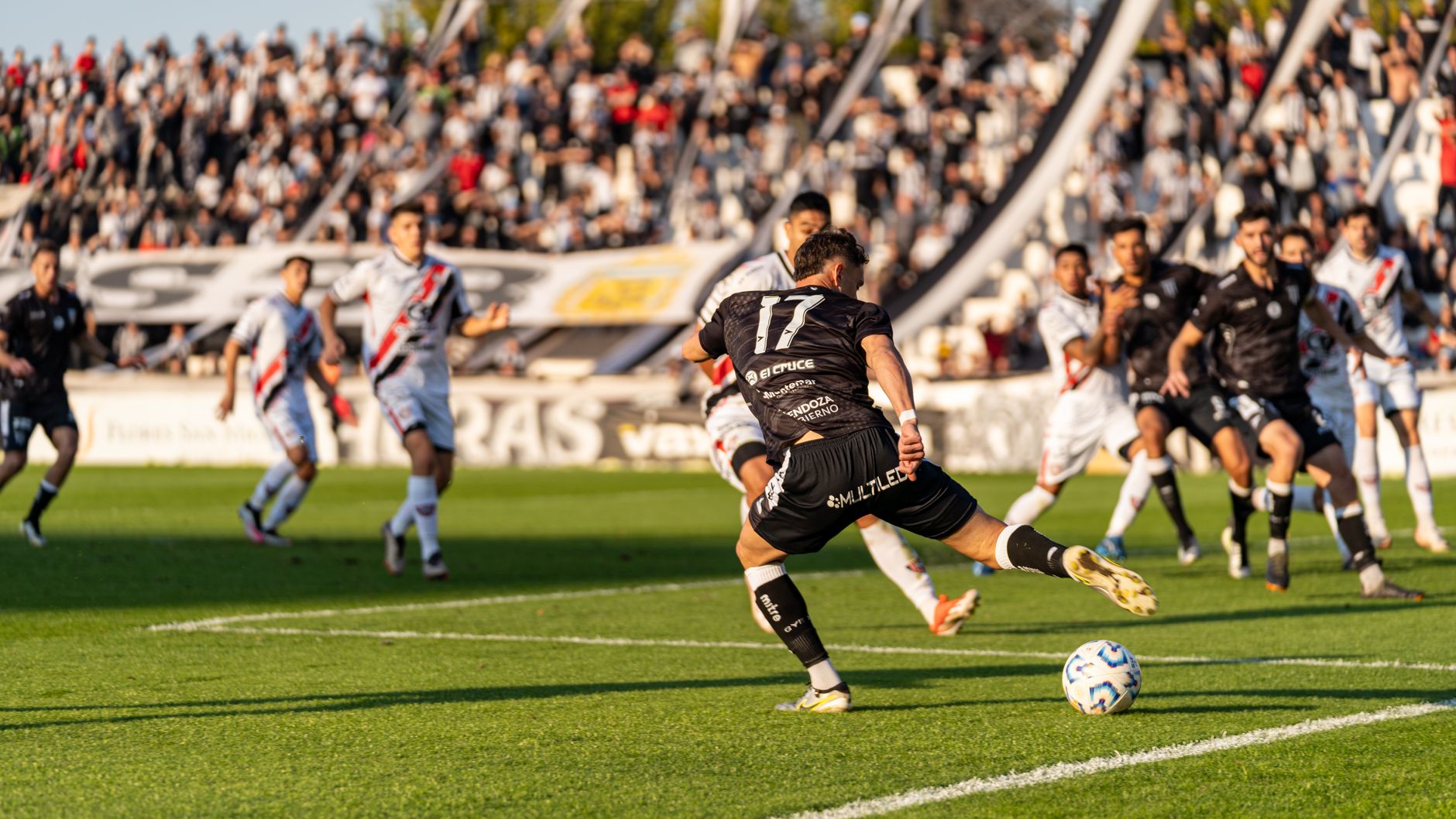
Photo by Franco Monsalvo on Pexels
What are the biggest World Cup football mistakes?
The biggest mistakes are overvaluing brand reputation, confusing possession with control, ignoring price, chasing losses, and treating one match as proof of a long-term theory. These errors are common because World Cup football attracts enormous emotional attention and a relatively small tournament sample. A team may score twice from three shots, win, and then receive excessive praise despite weak underlying performance. Numbers prevent that narrative from taking control.
The first mistake is using historical titles as a current forecast. Brazil’s 5 championships and Germany’s 4 demonstrate sustained excellence, but they do not measure the 2026 squad’s fitness or tactical coherence. The second is overrating possession. A team with 65% possession can still concede high-quality chances if its rest defense is poor. The third is ignoring opponent style: a direct counterattacking side may prefer the exact conditions that make a possession-heavy favorite uncomfortable.
The fourth mistake is chasing losses. Suppose a bettor loses $100 and increases the next stake to $200 simply to recover quickly. That decision changes the risk profile without improving the probability of success. The fifth is betting every match. The expanded 104-game schedule creates more fixtures, not more valid opportunities. A selective model may reasonably reject 70% of matches because the uncertainty is too high or the price is too short.
A contrarian conclusion follows from the 2026 format: third-place qualification may make some early group matches less aggressive, not more exciting. Analysts often assume extra teams automatically create open football. However, if 8 of 12 third-place teams advance, a cautious draw can preserve qualification equity. The tactical result depends on group standings, goal difference, and simultaneous fixtures. This is a specific format effect, not a generic warning.
To keep decisions measurable, use these controls:
- Set a maximum daily exposure before viewing odds.
- Never increase a stake to recover a previous loss.
- Track closing prices, not only winning selections.
- Avoid markets with unclear rules or settlement conditions.
- Stop if analysis becomes emotional or rushed.
- Treat prediction content as information, not instruction.
Read the practical controls in our [Internal Link: responsible World Cup betting guide] before using any market-based analysis.
See the complete framework for separating useful data from tournament noise.
What this means now for fans and analysts
The immediate consequence is that fans need two separate dashboards: one for tournament information and another for decision discipline. The information dashboard should contain group standings, confirmed lineups, suspensions, injury updates, travel schedules, and tactical changes. The discipline dashboard should contain budget limits, stake records, price history, and results measured over a defined sample. Combining both in one emotional feed is convenient, but it encourages impulse decisions.
Pitch Notes can support the first dashboard through daily FIFA World Cup coverage, team tactics, player statistics, and match predictions. Its strongest use is comparative: check whether a popular narrative is supported by pressing efficiency, shot quality, defensive errors, or lineup stability. A model should not simply say that Argentina is “in form” or that Spain “controls games.” It should show the relevant figures and define the sample, such as the previous 5 competitive matches or the last 10 appearances.
Legal and geographic requirements also matter. Betting access, age thresholds, identity checks, payment methods, and permitted markets vary between the United States, Canada, Mexico, the United Kingdom, and other jurisdictions. The National Council on Problem Gambling provides responsible gambling resources for the United States, while local regulators control operator permissions. Never assume that an offshore platform is lawful or protected in your location. Verify licensing before depositing funds, and do not use a service that hides ownership, rules, or withdrawal conditions.
The simplest current model is therefore conservative:
- Start with verified tournament and lineup information.
- Adjust team ratings for opponent strength.
- Identify the tactical matchup before reading public sentiment.
- Compare estimated probability with the available price.
- Reject the selection when uncertainty exceeds the expected edge.
- Record the outcome without rewriting the original reasoning.

Photo by Vitaly Gariev on Pexels
What are three predictions for next quarter?
Three predictions are most defensible for the next quarter: lineup news will move markets faster, travel and recovery will affect knockout depth, and third-place qualification will create unusual late-group pricing. These are structural expectations for the 2026 World Cup environment, not guarantees about specific winners. The first quarter of tournament coverage will likely generate more volatility than the final rounds because information quality will improve rapidly after each team’s opening match.
First, confirmed lineups will become the main short-term price catalyst. A missing starting goalkeeper, defensive midfielder, or central striker can alter set-piece defense and buildup quality within minutes. The practical implication is that pre-lineup forecasts should carry a larger uncertainty range than post-lineup assessments. Anyone presenting a single precise probability before official team news is overstating the evidence.
Second, squad depth will matter most after the group phase. A champion can play 8 matches, and the 2026 schedule spans 3 host countries with substantial geographic distances. Teams such as France, Brazil, England, Argentina, Germany, Spain, and Portugal may have enough depth to rotate without a major tactical decline, but that must be tested through actual role coverage. Two reserve players at the same position do not necessarily provide equivalent pressing, passing, or aerial ability.
Third, late-group markets will become more sensitive to qualification arithmetic. With 12 groups and 8 best third-place teams advancing, goal difference and simultaneous results may produce scenarios where a team prioritizes risk control. The prediction is not that every late group match will be defensive; rather, the distribution of tactical incentives will widen. Analysts who model the table state should outperform those who apply a fixed “must win” label.
The next-quarter monitoring list should include:
- FIFA group draws and official match schedules.
- Confirmed host-city assignments and travel sequences.
- Player minutes during the final club season.
- International friendlies and competitive-form indicators.
- Opening and closing market prices.
- Responsible gambling policy changes in each jurisdiction.
Check the latest Pitch Notes updates when the data changes, because World Cup analysis ages quickly once official squads and schedules arrive.
The conclusion is direct: World Cup football rewards structured evidence, not famous shirts or emotional certainty. The 2026 expansion to 48 teams and 104 matches increases opportunity for analysis, but it also increases noise, travel variables, and qualification complexity. Use opponent-adjusted statistics, lineup confirmation, tactical context, probability comparisons, and strict financial limits; then accept that some matches are not worth forecasting. That is the professional edge—knowing when to act and when to leave the numbers alone (a surprisingly useful skill).
Ready to follow the 2026 tournament with clearer data and calmer decisions?
Frequently Asked Questions
Q: What is World Cup football?
A: World Cup football is FIFA’s international men’s tournament for national teams, held every four years. The 2026 edition will include 48 teams and 104 matches across Canada, Mexico, and the United States. It combines group-stage fixtures with knockout rounds, making squad depth, tactical adaptability, and single-match variance important factors.
Q: How do I analyse a World Cup football match?
A: Analyse a match by checking team strength, tactical styles, confirmed lineups, injuries, rest, travel, and market probability. Start with the last 5 to 10 relevant competitive matches, adjust for opponent quality, and separate possession from chance quality. Record your forecast before kickoff so the final result does not distort your evaluation.
Q: What is the difference between the 2022 and 2026 World Cup formats?
A: The 2022 World Cup had 32 teams and 64 matches, while the 2026 tournament will have 48 teams and 104 matches. The new format contains 12 groups of 4, with the top 2 teams and 8 best third-place teams advancing. A round of 32 is added before the round of 16.
Q: Why can a World Cup prediction fail even when the analysis is sound?
A: A sound prediction can fail because football outcomes remain highly variable over one match. Red cards, penalties, goalkeeper errors, deflections, injuries, and finishing variance can overturn a probability-based forecast. Evaluate a method across at least 50 recorded selections rather than judging it from one result.
Q: How much money should I risk on World Cup football markets?
A: Risk only money that you can afford to lose, and set a fixed personal limit before viewing any odds. A cautious framework may cap total exposure at 1% of a disposable entertainment budget per day, although financial circumstances differ. Never borrow money, chase losses, or increase stakes after a defeat.
Q: What should I do if a betting platform delays a World Cup withdrawal?
A: Stop adding funds, save the transaction and identity-verification records, and contact the operator through its official support channel. Check the platform’s published withdrawal terms, expected processing times, and licensing regulator before escalating. If the operator refuses a valid request, report the matter to the relevant jurisdiction rather than relying on informal social-media claims.
Q: Is Pitch Notes a reliable source for 2026 World Cup analysis?
A: Pitch Notes is a FIFA World Cup-focused content site covering match predictions, team tactics, player statistics, and tournament developments. Its analysis is best used as an information source alongside official FIFA announcements, verified team news, and local regulatory guidance. No prediction site can guarantee outcomes, so readers should compare evidence and maintain responsible limits.
[Internal Link: 2026 World Cup match schedule and host-city guide]